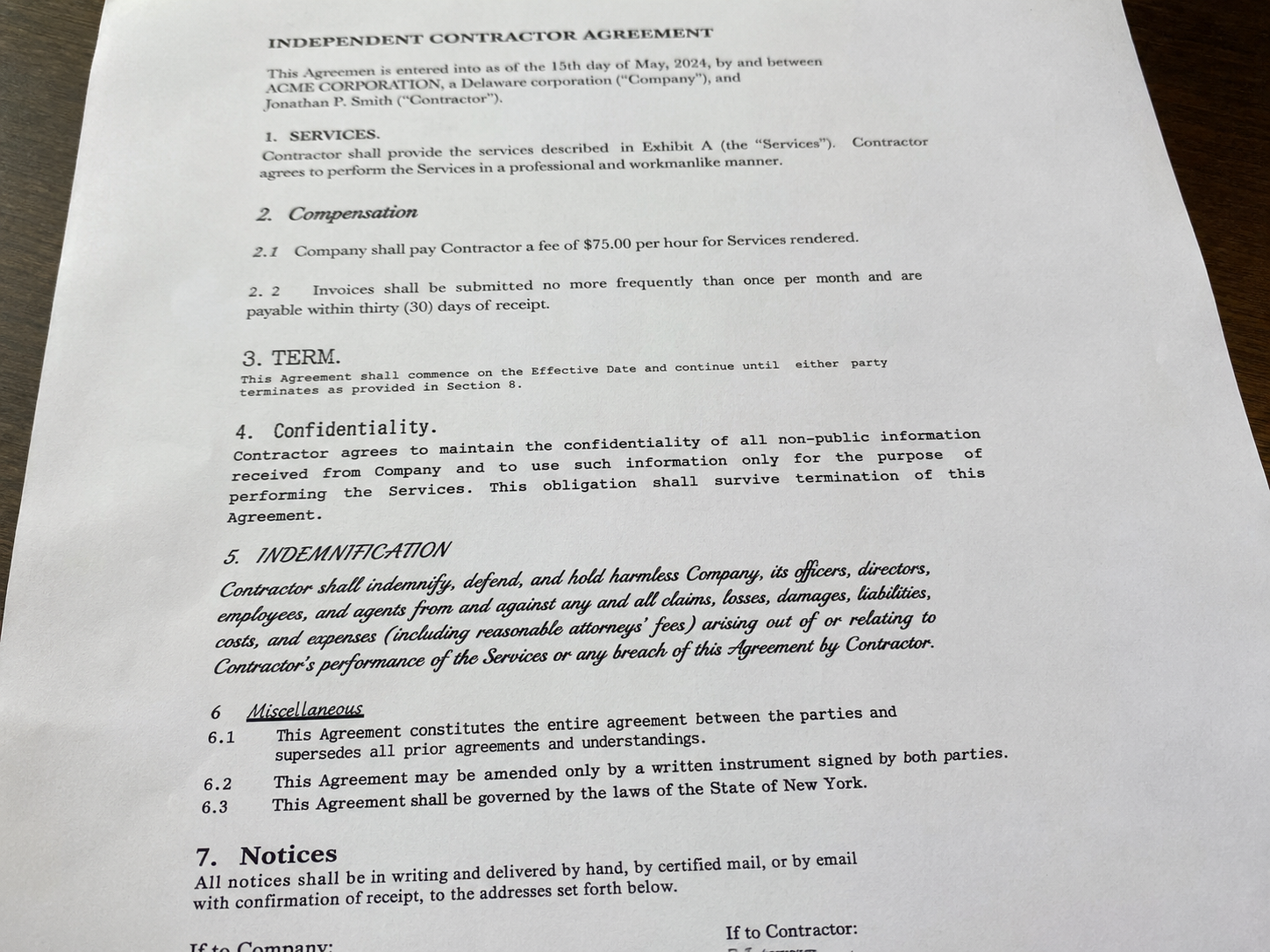
Fix a heading on page 3 of a Microsoft Word document, and the margins on page 40 move. It's not just you. In one survey we ran, 96% of Word users struggled with formatting, and 66% named formatting consistency as a major blocker in their workflows.
But it doesn't need to be that way. From legal professionals to fiction writers, nearly every Word formatting problem they face traces back to three things: two formatting systems fighting each other, fields that don't refresh on their own, or a layout setting you can't see. Once you know which one you're looking at, the fix takes about thirty seconds.
Here are the top ten power tips that will save you from spending hours wrestling with Word formatting problems.
1. Your formatting changes when you edit something unrelated
Turn on Reveal Formatting with Shift+F1 and check the box for "Distinguish style source." That pane will show you, for any text you click into, which formatting comes from the style and which was applied by hand on top of it.
This is the root of most of the problems further down this list. Word runs two formatting systems at once: styles, which define how a category of text looks, and direct formatting, which is what happens when someone selects text and clicks the bold button. Direct formatting always wins, and it's invisible until you go looking for it. So a document that looks consistent can be carrying dozens of one-off overrides that behave unpredictably the moment anything shifts.
To clear them, select the text and press Ctrl+Spacebar to strip direct character formatting, then Ctrl+Q to strip direct paragraph formatting. Then reapply the style you actually want. TechRepublic has a good walkthrough of Reveal Formatting and two other tools for finding inconsistencies.
2. Pasting text from another document breaks the whole page
Change your default paste behavior once instead of remembering Paste Special every time. Go to File > Options > Advanced, find the "Cut, copy, and paste" section, and set both "Pasting between documents" and "Pasting from other programs" to Merge Formatting or Keep Text Only.
Pasted text doesn't arrive alone. It brings the style definitions from wherever it came from, and when those collide with your document's definitions, Word resolves the conflict in ways that are hard to predict and easy to miss. This is why a paragraph pasted in on page 3 can change spacing forty pages away.
It's also the single most common way AI-assisted work damages a document. The dominant workflow right now is drafting in ChatGPT or Claude, then pasting the result into Word, and that paste is the exact action described above. In our own survey research at SquarePact, people described spending an hour stripping styles out of pasted text and rebuilding the file from scratch. If you're going to use AI on a document that matters, it's worth using a tool that works inside Word rather than one you paste in and out of.
3. Fonts change on their own
Set the document's theme fonts rather than fixing fonts by hand. Go to the Design tab, click Fonts, then Customize Fonts, and set the heading font and the body font there.
Word's built-in styles mostly don't specify a font by name. They point at two placeholders, +Headings and +Body, which the document theme fills in. Each theme font set defines one font for headings and one for body text, so switching themes, or opening a file built from a different template, changes fonts across the whole document without anyone touching the text.
Any font that doesn't follow when you change the theme was applied directly. Use Reveal Formatting from item 1 to find it.
The reason this matters more than it sounds like it should is that it hides in single characters. A period left in the old font after everything around it changed is invisible at 11 points and obvious the moment the document gets printed, converted to PDF, or opened on someone else's machine. Nobody catches those by reading. SquarePact flags character-level inconsistencies like that so they don't surface in front of a client.
4. Numbered headings restart, or every heading becomes "1."
Link each list level to its heading style. Go to Home > Multilevel List > Define New Multilevel List, click the More button in the bottom-left corner, and use the "Link level to style" dropdown to connect Level 1 to Heading 1, Level 2 to Heading 2, and so on.
The More button is the whole problem. That dropdown is hidden until you click it, so most people build a multilevel list, never connect it to their heading styles, and end up with two separate numbering systems in the same document. Numbers then restart at odd places, indents drift, and restarting one list breaks another. Microsoft's own guidance is to apply numbering to built-in heading styles, and Office Watch has a detailed breakdown of why the link matters.
5. Your table of contents won't update, or is missing headings
Right-click the table of contents, choose Update Field, and pick "Update entire table" rather than "Update page numbers only." Page numbers only will refresh the numbers and quietly ignore every heading you added or renamed.
The table of contents is a field, which means it's a stored instruction that shows a cached result until something tells it to recalculate. It will happily display last week's structure indefinitely.
Missing entries are almost always a styling problem, not a table of contents problem. Word builds the list from heading styles, so a heading you formatted by hand with bold and a larger font size looks like a heading to you and looks like a paragraph to Word. Apply the real Heading style and update again. One more thing worth checking: if you inserted a Manual Table of Contents, it will never update, because it's placeholder text rather than a field.
6. Cross-references point at the wrong section
Press Ctrl+A to select everything, then F9. That updates every field in the document at once, including cross-references, the table of contents, page numbers, and figure captions.
Cross-references are fields too, and they go stale the same way. Microsoft documents the specific case: insert a new heading into an outline-numbered document and existing cross-references keep pointing at the old number until you update the field. If instead you see "Error! Reference source not found," the target itself is gone, usually because the bookmark it pointed to was deleted along with the text around it.
The prevention is the part people skip. If you type "see Section 4.2" as ordinary text, it will never update, no matter how many times you press F9. Use Insert > Cross-reference so Word owns the number.
Verifying references by hand means clicking through every one in the document and confirming it still lands where it should, which nobody does on a fifty-page report. SquarePact has a built-in scan for this, and it flags references pointing at the wrong section or at a target that no longer exists.
7. Page numbers restart in the middle of the document
Double-click into the footer, go to the Header & Footer tab, and check whether "Link to Previous" is turned on. If a section break was inserted and that link got broken, the new section starts its own numbering.
A section break isn't the same as a page break. A page break just pushes text to the next page. A section break creates a new region with its own margins, orientation, headers, footers, and page numbering, which is what you want for a landscape page or a front matter section, and what you absolutely don't want by accident. Turn on formatting marks with Ctrl+Shift+8 to see which breaks are actually in your document.
To fix the numbering itself, go to Insert > Page Number > Format Page Numbers and select "Continue from previous section."
8. A table jumps to the next page, or loses its header row
Select the top row of the table, then go to the Table Layout tab and click Repeat Header Rows. Your selection has to include the first row of the table for this to work at all, and repeated headers only show up in Print Layout view or on paper. One more catch from the same page: Word won't repeat the header at all if someone inserted a manual page break inside the table.
The related problem, where the entire table refuses to split and leaps to a new page, usually has one of two causes, and both are the result of a setting somebody applied without realizing what it does. Either every row got marked as a header row instead of just the first, or "Keep with next" is switched on across the whole table. To check the second one, select the table, open the Paragraph dialog from the Home tab, and look at the Line and Page Breaks tab. This Microsoft Q&A thread walks through the same diagnosis.
9. Images move when you add text above them
Select the image, click the Layout Options icon, and decide whether it should flow with the text or hold its position on the page.
Images in Word come in two kinds and they behave completely differently. In Line with Text treats the image like a very large character, so it moves whenever the surrounding text moves. Everything else is floating, and floating images are anchored to a paragraph. Delete or move that paragraph and the image goes with it, which is why images sometimes vanish to a different page for no visible reason.
If a floating image needs to stay put, open Layout Options, click See more, and choose Lock anchor. If it should travel with its paragraph, choose Move with text instead.
10. Merging documents from several people produces a mess
Don't copy and paste them together. Open a blank document, go to Insert > Object > Text from File, and select the files you want to combine, holding Ctrl to pick more than one.
This isn't a perfect fix and Microsoft is upfront about that: the format might not stay the same when you merge documents. But it's meaningfully better than pasting, because pasting runs you straight into item 2 once per document. If the files are different versions of the same document with tracked changes from different reviewers, use Review > Compare > Combine instead, which merges the revisions rather than the text.
Why these keep coming back, and where AI actually helps
Every fix above is a repair, not prevention. You can clean a document perfectly on Friday and get it back on Monday with direct formatting sprayed through it, because the person who edited it over the weekend had no idea any of this existed. That's not a knowledge problem you can solve by sending your team a link to this article. It's a structural feature of a tool where the fast way to make text look right and the correct way to make text look right are different actions.
This is where the obvious AI answer fails. General-purpose assistants can't help with formatting, because using one means pasting your document out and pasting the result back in, which is the single most reliable way to break the formatting you were trying to fix. And Copilot, which does live inside Word, has a credibility problem with exactly the people who need this most. In SquarePact's survey of professionals in finance, IT, legal, and government, 88% had access to Copilot and 60% said it wasn't reliable enough for documents that matter. The complaint that came up repeatedly: it tells you where to click instead of making the change.
So the test for whether an AI tool can actually help here is narrow, and it's worth applying to anything you evaluate. Does it edit the document's underlying structure directly, rather than handing you replacement text? Does it show you each change before it goes in? And does it apply changes as tracked changes you can reject with Word's own tools?
That's the specification we built SquarePact against. It runs as a panel inside Word, it proposes each change as a suggestion with the exact difference and the reason it's suggesting it, and nothing enters your document until you click Apply. When you do, it turns on track changes first, so every edit lands as something you can accept or reject like any other revision.
Quick answers
Why does my Word formatting change when I edit something else?
Almost always because direct formatting has been applied on top of a style. Press Shift+F1 to open Reveal Formatting and check "Distinguish style source" to see exactly where.
How do I update every field in a Word document at once?
Press Ctrl+A to select the whole document, then press F9. This refreshes the table of contents, cross-references, page references, and figure numbers together.
Can Copilot fix Word formatting problems?
It can describe what to do, but it won't make the structural change for you. In our survey, 60% of professionals with Copilot access said it wasn't reliable enough for important documents.
Get the next fix before Word breaks something else.
I'll send you short Word fixes like these, plus what we learn building SquarePact, the add-in that makes them for you.
Rather not fix it by hand? Try SquarePact free inside Word.
Dr. John Licato is CEO of Actualization.AI, Associate Professor at the University of South Florida Bellini College of Artificial Intelligence, Cybersecurity and Computing, and Director of the Advancing Machine and Human Reasoning lab.